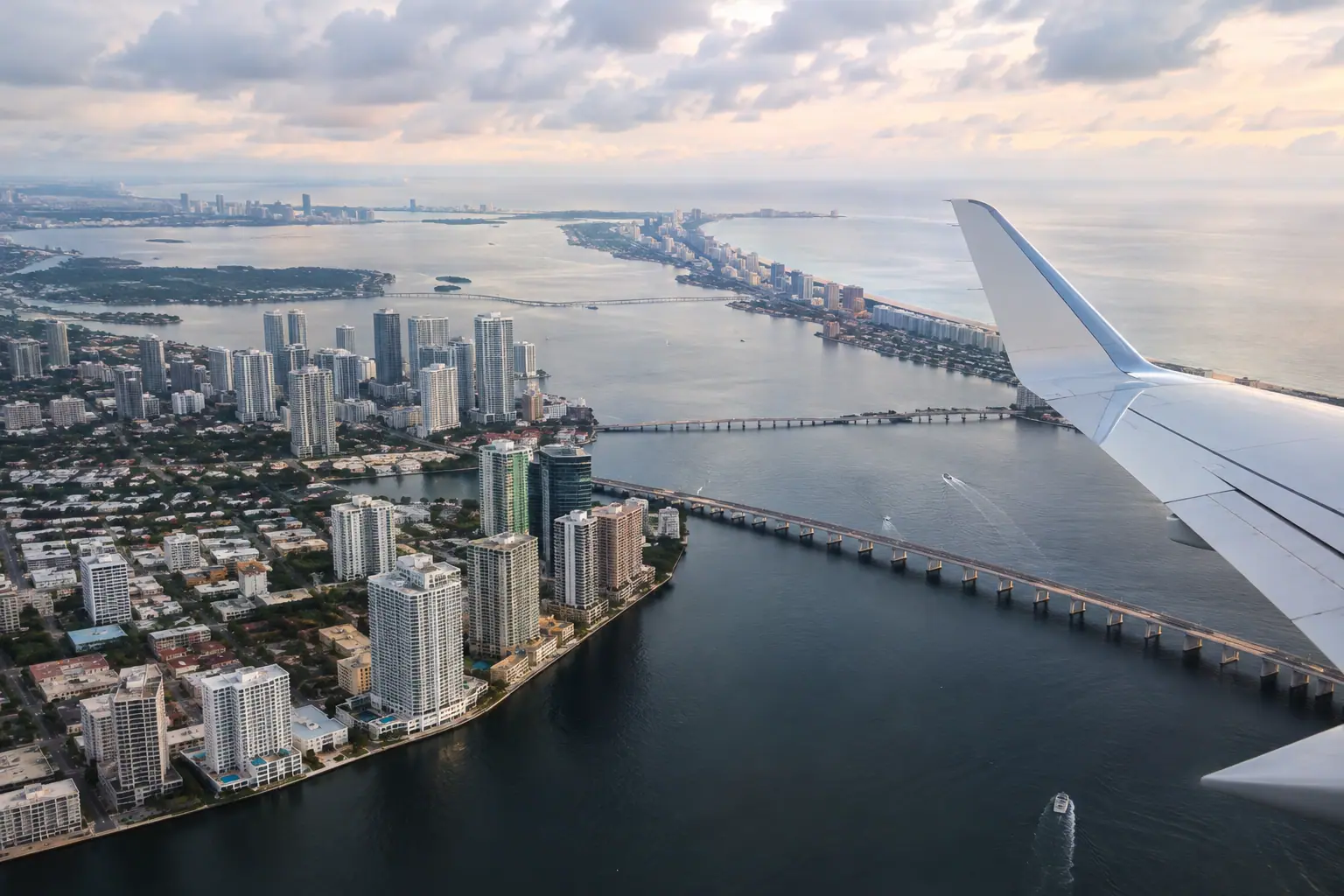
Miami events charter jet by season
A Miami events charter jet quote depends on the calendar. A light jet to Nassau runs $4,000 to $6,000. Peak weeks change everything else.
- Start
- Event travel
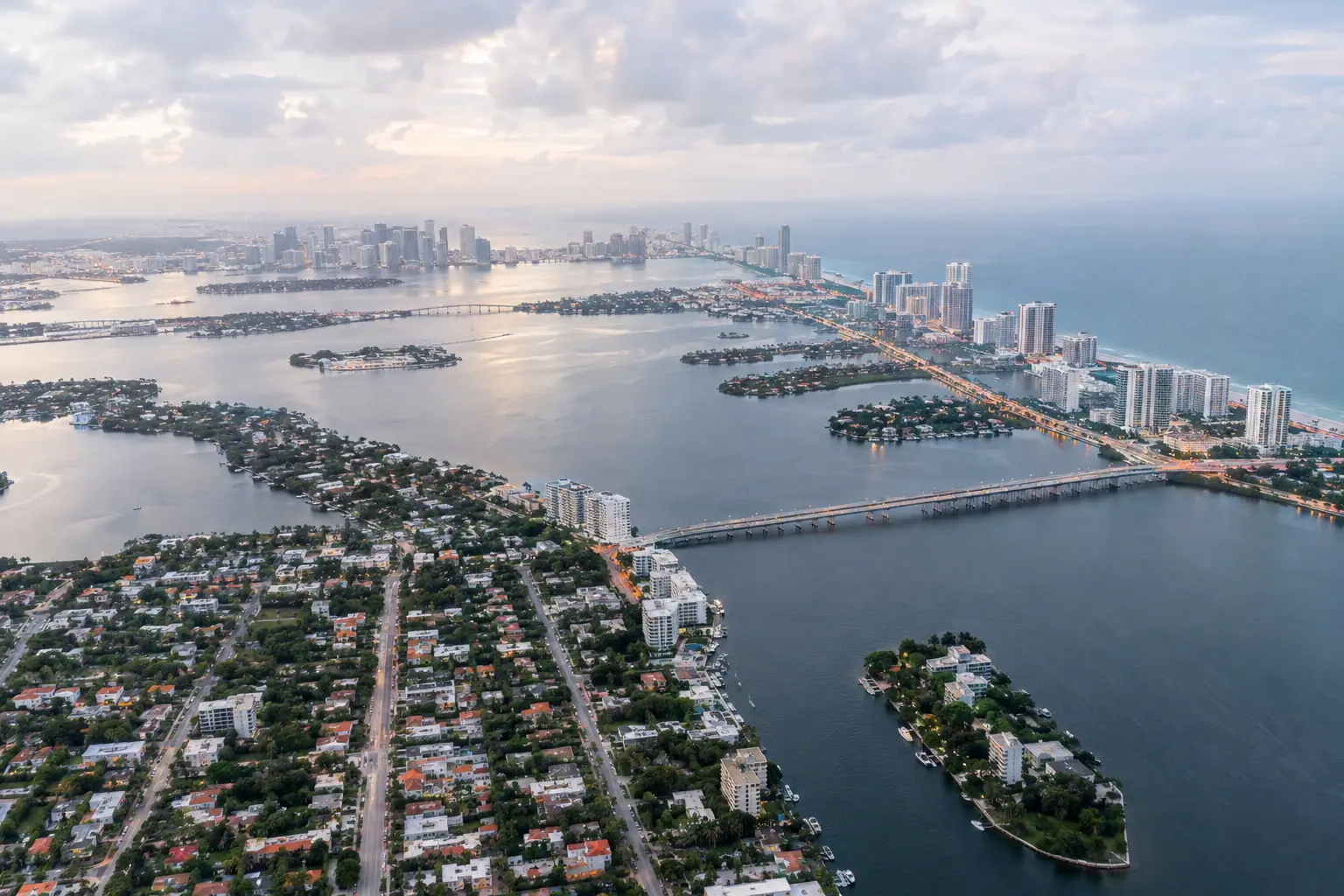
Miami's event calendar does not spread evenly. Art week, the spring break stretch and the summer festival weekends all pull the same aircraft into the same four airports, and the ramp space at Opa Locka and Miami Executive tightens first. Operators know this and price accordingly. If you are arranging a Miami events charter jet around a date, the month matters as much as the aircraft.
This page walks through the seasons the way they actually behave: which weeks strain the FBOs, when empty legs appear, and how density altitude in July changes what a light jet can carry out of an 8-foot-elevation field. Plan your Miami events charter jet around the month, not just the aircraft. Prices here are estimates and move with demand.
Event seasons that move demand
Art week and the December design fairs
- December
The first week of December is the tightest of the year on Miami ramps. Opa Locka's four FBOs and Miami Executive's two fill with midsize and heavy jets, and overnight parking gets scarce. Book a Miami events charter jet for art week well ahead of the December squeeze at Opa Locka. Light jets can still slot in, but repositioning costs climb.
New Year's Eve and the winter influx
- Late December into January
Demand runs from Christmas through the first week of January. Heavy jets carrying 10 to 14 passengers arrive from the Northeast and stay parked. Expect heavy jet rates of $9,500 to $14,500 per hour on winter routes into Miami. If your return leg is flexible, then a one-way out can be cheaper than a round trip.
Boat show and the February convention block
- February
The Miami International Boat Show and the surrounding conventions pull a steady stream of midweek arrivals. Midsize jets are the workhorse here, running $5,200 to $7,800 per hour. Ramp space at Miami International is limited to one FBO, so many operators prefer Opa Locka or Fort Lauderdale for parking.
Spring break and the March surge
- March
March brings families and college crowds, and light jets get booked out. A Miami events charter jet from New York runs 949 nautical miles in about 2 hours 37 minutes in a light jet. When spring break peaks, so does the cost of repositioning an aircraft to Miami for a one-way pickup.
Ultra and the spring electronic festivals
- Late March
Festival weekends push short-hop demand from Nassau and San Juan. Those routes are quick: Nassau is 161 nautical miles, about 42 minutes in a light jet. Turboprops at $2,200 to $3,500 per hour become viable for the 6 to 8 passenger groups. Book the return leg at the same time or pay more later.
Formula 1 race weekend
- May
Race weekend is a single concentrated spike. Every class gets pulled in, from turboprops to heavy jets, and the FBOs at Opa Locka and Fort Lauderdale run at capacity. If you need a night departure after the race, then confirm ramp access and crew duty limits early. CBP processing for international arrivals slows with volume.
Summer festivals and July heat
- June through August
Summer is slower for events but harder on performance. At 115F, density altitude at these airports reaches about 2,500 feet, and in July it sits near 1,900 feet. A light jet departing Opa Locka at 8 feet elevation in July heat may need a fuel stop on long routes. Plan the route with that in mind.
Labor Day and the late-summer close
- September
The holiday weekend marks the end of the summer lull. Demand picks up for quick trips to the Bahamas and Turks and Caicos, 505 nautical miles and about 1 hour 32 minutes in a light jet. Turboprops handle the shorter hops well, and empty legs start appearing as aircraft reposition for fall.
Holiday season and the November build
- November through December
Thanksgiving through mid-December builds toward art week. Heavy jets from Los Angeles and San Francisco, 2,035 and 2,240 nautical miles respectively, need the longer range of a super-midsize or heavy aircraft. A super-midsize jet at $7,200 to $10,000 per hour covers the transcon routes without a stop. Reserve early.
How to book around Miami event weeks
Start with the date, not the aircraft. Event weeks change which airports have ramp space, and that drives the quote more than the hourly rate does. When you book a Miami events charter jet more than three weeks out, then you have more aircraft to choose from and better parking options at Opa Locka. We arrange the flight through FAA Part 135 operators who hold operational control, and we act as your agent under DOT Part 295.
For international legs, CBP clearance adds time on arrival. Nassau and Turks and Caicos are common, and both need passport checks. A Miami events charter jet to Turks and Caicos covers 505 nautical miles in about 1 hour 32 minutes. If your group is large, then a heavy jet with 10 to 14 seats can be cheaper per person than two light jets. Prices are estimates; the operator confirms the final number.




Questions
How far ahead should I book a Miami events charter jet for art week?
Four to six weeks is the practical window for early December, when Opa Locka's four FBOs and Miami Executive's two fill first. If you wait until two weeks out, then you may pay a repositioning fee to bring an aircraft in from another city. Prices are estimates and move with demand, so the earlier quote is usually the more stable one.
What does a light jet cost from New York to Miami?
Expect $10,000 to $15,000 for the 949-nautical-mile route, about 2 hours 37 minutes in a light jet. That range covers a Citation CJ4 or similar. If you are traveling during a peak event week, then the upper end is more likely, so budget toward $15,000. The quote is an estimate until the FAA Part 135 operator confirms it.
Which Miami airport is best during a busy event week?
Opa Locka has four FBOs and an 8,002-foot runway, which gives it the most ramp space and the best options for larger jets. Miami International has one FBO and heavy airline traffic. If your event is on Miami Beach, then Opa Locka is usually the shorter drive, and Fort Lauderdale is the backup when Miami fills.
Does summer heat affect departures from Miami?
Yes. At 115F, density altitude at these airports reaches about 2,500 feet, and in July it sits near 1,900 feet. A light jet with a full cabin may need a fuel stop on longer routes. If you are flying to the West Coast in July, then plan for a super-midsize or heavy jet to avoid the stop and keep the schedule.
Can I find an empty leg around Miami event weeks?
Empty legs appear when aircraft reposition after a peak, most often in the days after art week and the spring festivals. If you are flexible on timing, then an empty leg can cut the cost of a one-way. Availability is unpredictable, so keep a backup quote in hand and confirm the operator before you commit.
Who is responsible for the flight when I book a Miami events charter jet?
The FAA Part 135 operator holds operational control and responsibility for the flight. We arrange the charter as your agent under DOT Part 295 and do not own any aircraft. If an issue arises, then the operator handles crew, maintenance and dispatch. We stay involved to help resolve scheduling problems.
Do international legs need customs clearance?
Yes. Nassau and Turks and Caicos are the common short hops, and both need CBP processing on arrival. The Nassau run is 161 nautical miles, roughly 42 minutes in a light jet, but budget extra ground time for clearance. If your group carries a lot of luggage, then a light jet's 71 cubic feet may not be enough.
How does passenger count change the aircraft I need?
A light jet seats 4 to 7, a midsize 7 to 9, and a heavy jet 10 to 14. If your group is above 9, then a heavy jet at $9,500 to $14,500 per hour can be cheaper per person than two light jets. Match the cabin to the headcount before you compare hourly rates, because the cheaper hourly number is not always the cheaper trip.